|

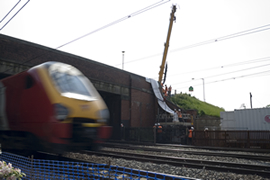 For the past 8 years we have
been sub contractors to one of Network Rail’s Main
contractors. For the past 8 years we have
been sub contractors to one of Network Rail’s Main
contractors.
Providing maintenance to the
rail network involves many trades, and our speciality is
the cleaning, inspection and rehabilitation of the
hundreds of surface water culverts which run beneath the
tracks.
Many of these culverts have
had no maintenance for decades, and having been
constructed up to a hundred years ago, can be in a very
dilapidated state.
Our role in these operations
include the actual locating of the inlets and outlets,
arranging access across fields and along the tracks,
removal of the silt and debris from within the culverts,
and inspection of the structures integrity.
Once all this is completed,
we can then design a suitable rehabilitation package.
This may
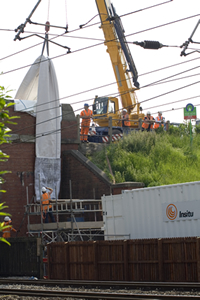 include anything from minor pointing up of jointwork, right through to the installation of 32mm
thick hot cure linings. include anything from minor pointing up of jointwork, right through to the installation of 32mm
thick hot cure linings.
Some of these culverts have
been up to 40 metres long, with a diameter of 1500mm,
which puts this type of operation into the category of
major civil engineering works.
When planning these
operations, consideration has to be given to PTS and
Confined Space training, transport to the work area
logistics, scaffold erection, overpumping arrangements,
and the actual installation of the liner. Lighting of
the site is required during overnight work. Reopening of
lateral connections from within the structure may also
have to be carried out.
Environmental considerations
include disturbing local wildlife as little as possible,
the removal of arisings and contaminated water from
site, (and disposal of same), and pollution control
during inflation of the liner. When the works are
finished, the area is tided up, and all evidence of
activity removed. Mother Nature can then take over!
Much of this type of work
does not have to be carried out during periods of
“possession”, which is often overnight at weekends, and
very expensive. The biggest benefit of lining these
structures is the relatively little time needed to
complete the work. |